Together Working
面向本地 AI worker teams 的 CLI-first AI Department Operating System,用于 task orchestration、review、verification 与 integration。
Together Working 是本地 AI worker control plane,目前已经演进为运行在开发者机器上的 CLI/TUI。它通过 task contracts、worker routing、daemon-owned state、review/approval flows、verification gates 与 operator reports 协调 Codex、Claude、Gemini、Amp、OpenCode 和其他 agent CLI。
项目迭代很快;public repository 可能不包含最新 CLI/TUI、daemon、packaging 与 workflow testing 细节。
- 根据 readiness、capability fit、fallback、degraded state 与 cooldown 设计 worker routing,避免把 task 分配给不可用 worker。
- 形成 review/verification flow,使 agent output 在 integration 前必须提供 evidence、diffs、test results 与 approval。
- 项目正在积极开发,并在开发者会话中测试,用于提升 workflow quality、测量 performance、评估 cost/token behavior 与 verification quality。
项目亮点
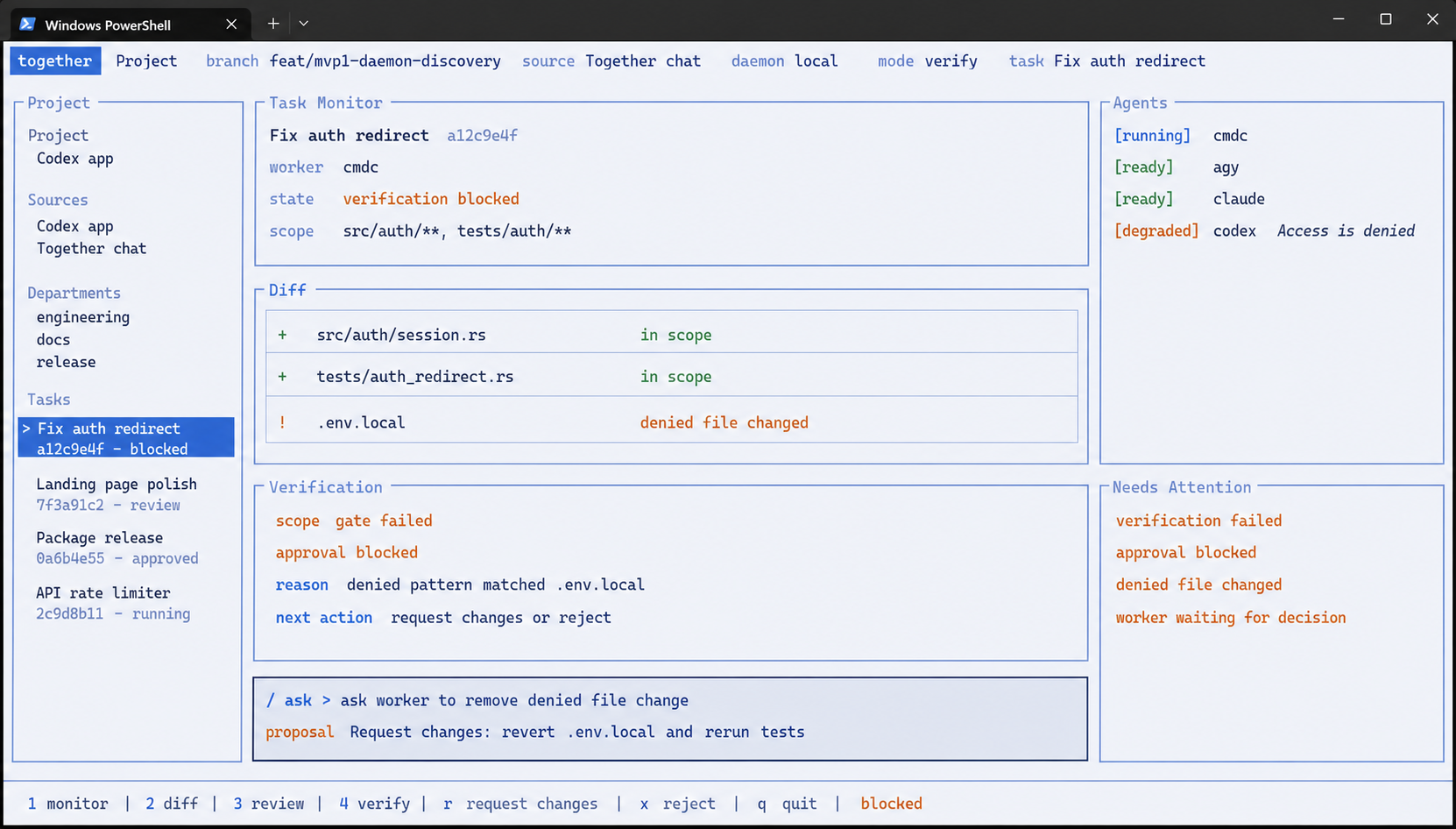
跟踪 task progress、worker state、events、pending reviews、blocked work 与 developer intervention points。
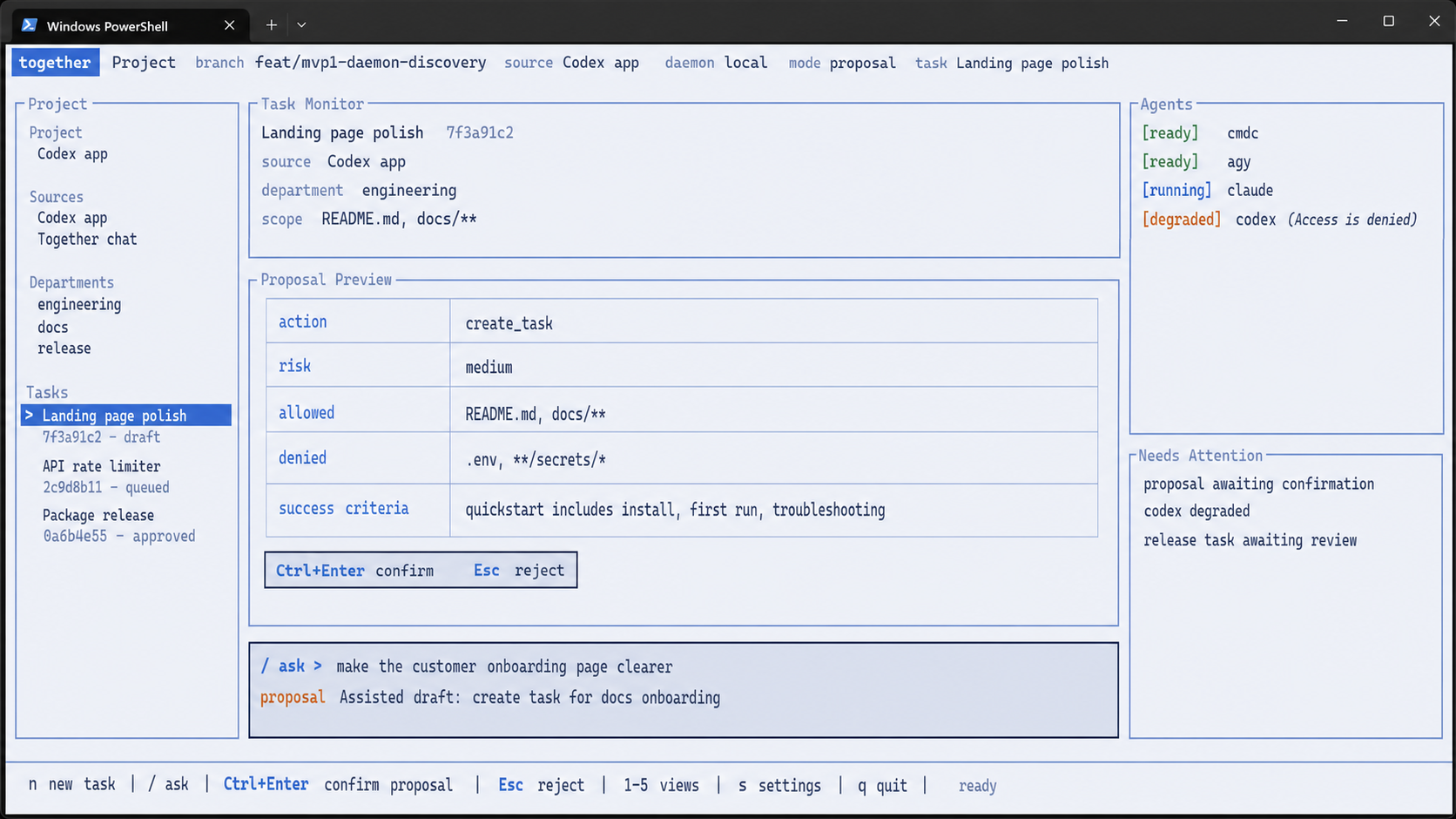
按 status、owner、worker、priority、scope 与 verification requirements 管理 tasks。
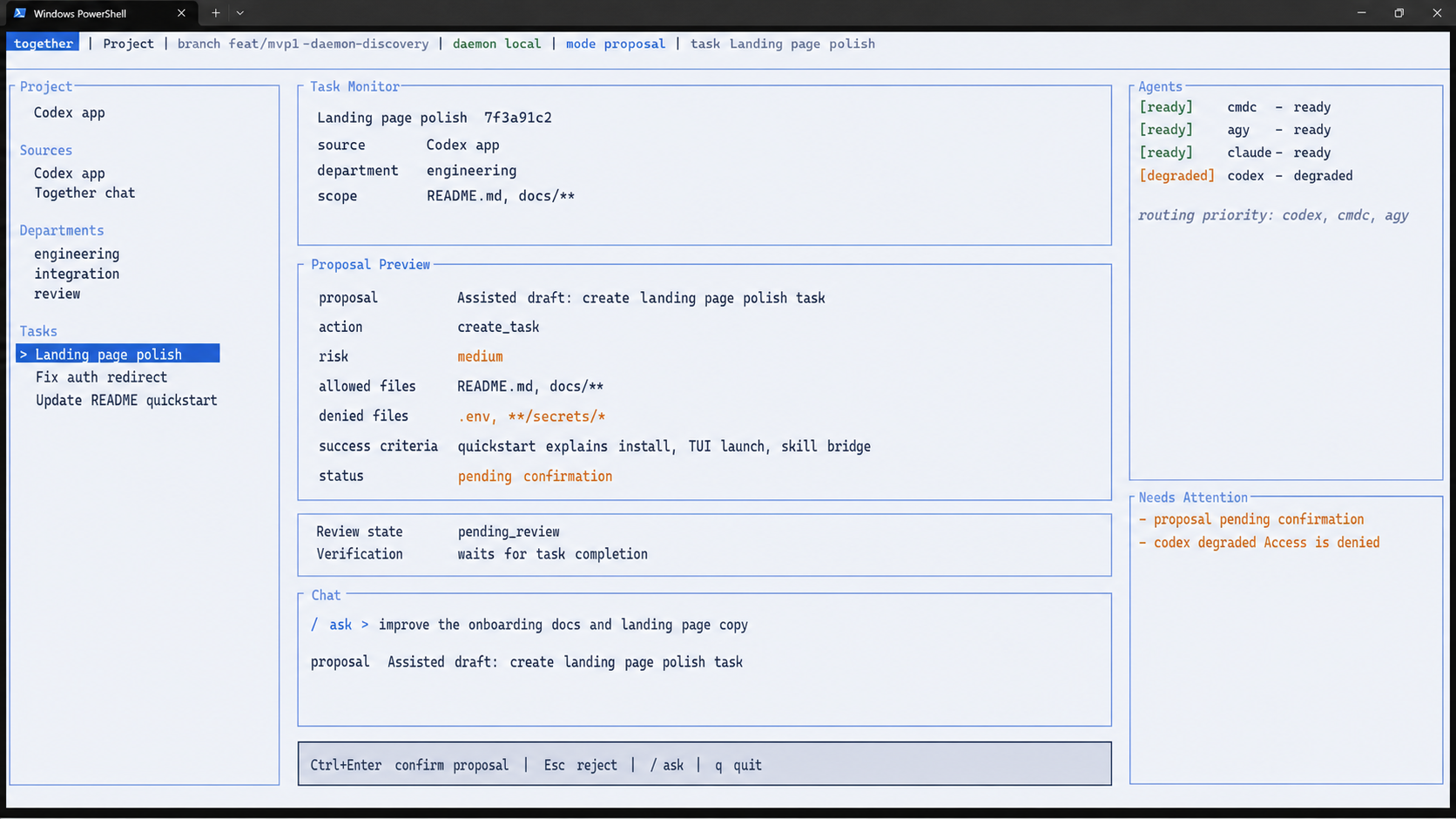
检查 task contracts、allowed files、diff evidence、logs、review status、verification results 与 integration decisions。
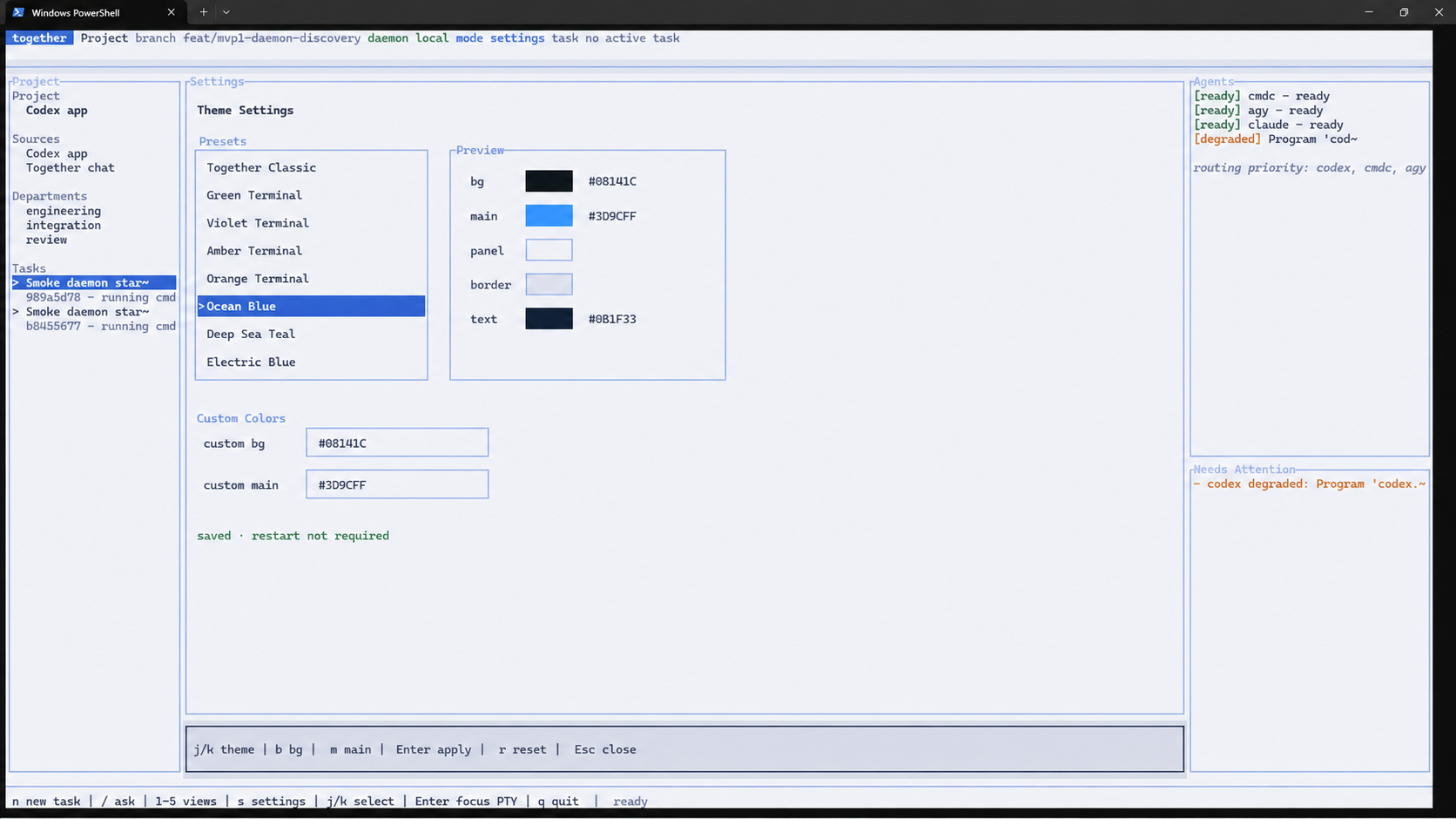
配置 providers、routing policy、daemon/client behavior、approval defaults、local artifacts 与 workflow preferences。
视频与演示
Timeline
项目背后
AI departments, not AI chats
Together Working 把 AI coding agents 视为拥有角色、能力、状态和权限边界的 workers。Codex 不需要携带整个 context;它负责协调、验证并集成 specialized workers 的输出。
CLI-first operating layer
产品已经转向 CLI/TUI,因为这更贴近开发者真实工作环境。开发者可以在 terminal 中查看 daemon status、浏览 tasks、观察 monitor、request review、approve results 并调整 settings。
用 task contracts 替代开放式 prompts
每个 task 都带有 scope、allowed files、denied files、deliverables、success criteria、reviewers 与 verification requirements。这减少了 out-of-scope edits,也让 output 在 integration 前可以被 review。
通过真实 workflow 测量 performance
Together Working 正在开发者工作会话中测试 context size、task latency、fallback rate、verification pass rate、diff quality 与 human review effort。这些指标会成为 routing intelligence 与可信 benchmark 的基础。
Gallery
对这个项目感兴趣?
一起构建适合真实 workflow 的 AI 与 edge 系统。