Together Working
A CLI-first AI Department Operating System for local AI worker teams, task orchestration, review, verification, and integration.
Together Working is a local AI worker control plane that has evolved into a CLI/TUI for developer machines. It coordinates AI coding agents such as Codex, Claude, Gemini, Amp, OpenCode, and other agent CLIs through task contracts, worker routing, daemon-owned state, review/approval flows, verification gates, and operator reports.
The project is moving quickly; the public repository may not reflect every latest CLI/TUI, daemon, packaging, and workflow-testing detail.
- Developed worker routing concepts based on readiness, capability fit, fallback, degraded state, and cooldown so tasks are not assigned to unavailable workers.
- Shaped a review and verification flow where agent output needs evidence, diffs, test results, and approval before integration.
- Currently under active development and tested inside developer sessions to improve workflow quality, measure performance, evaluate cost/token behavior, and track verification quality.
Project Highlights
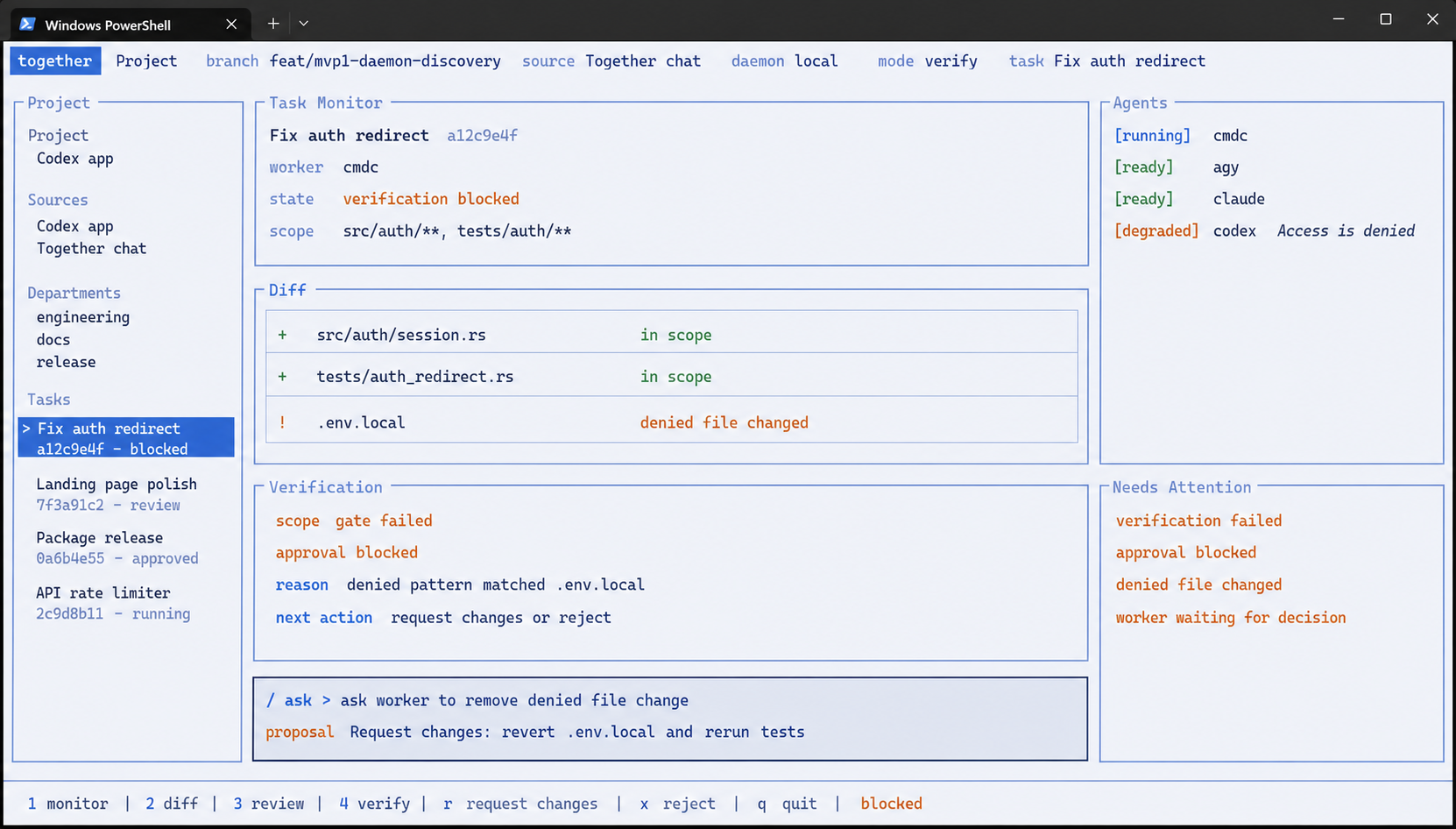
Track task progress, worker state, events, pending reviews, blocked work, and developer intervention points.
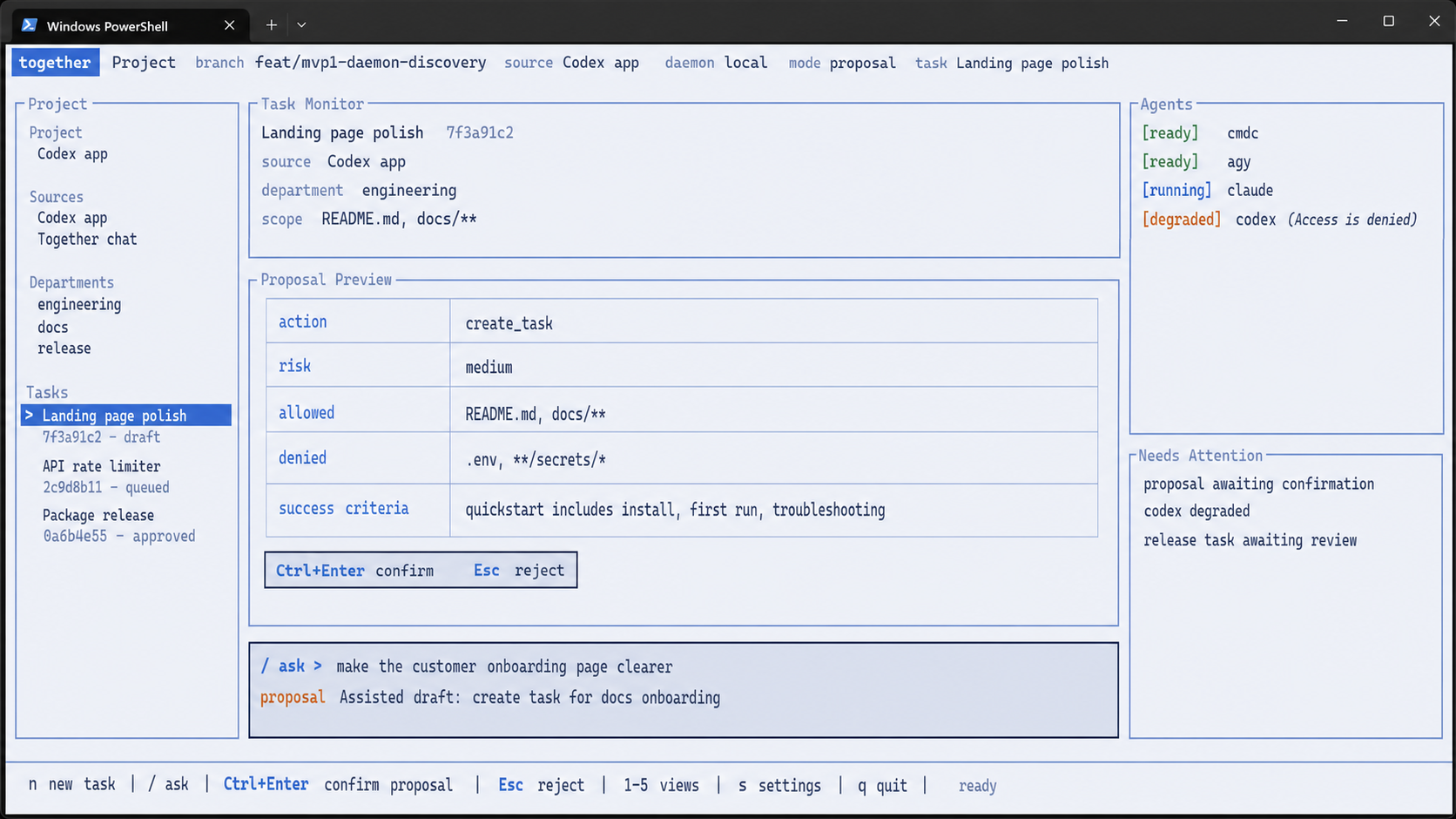
Manage tasks by status, owner, worker, priority, scope, and verification requirements.
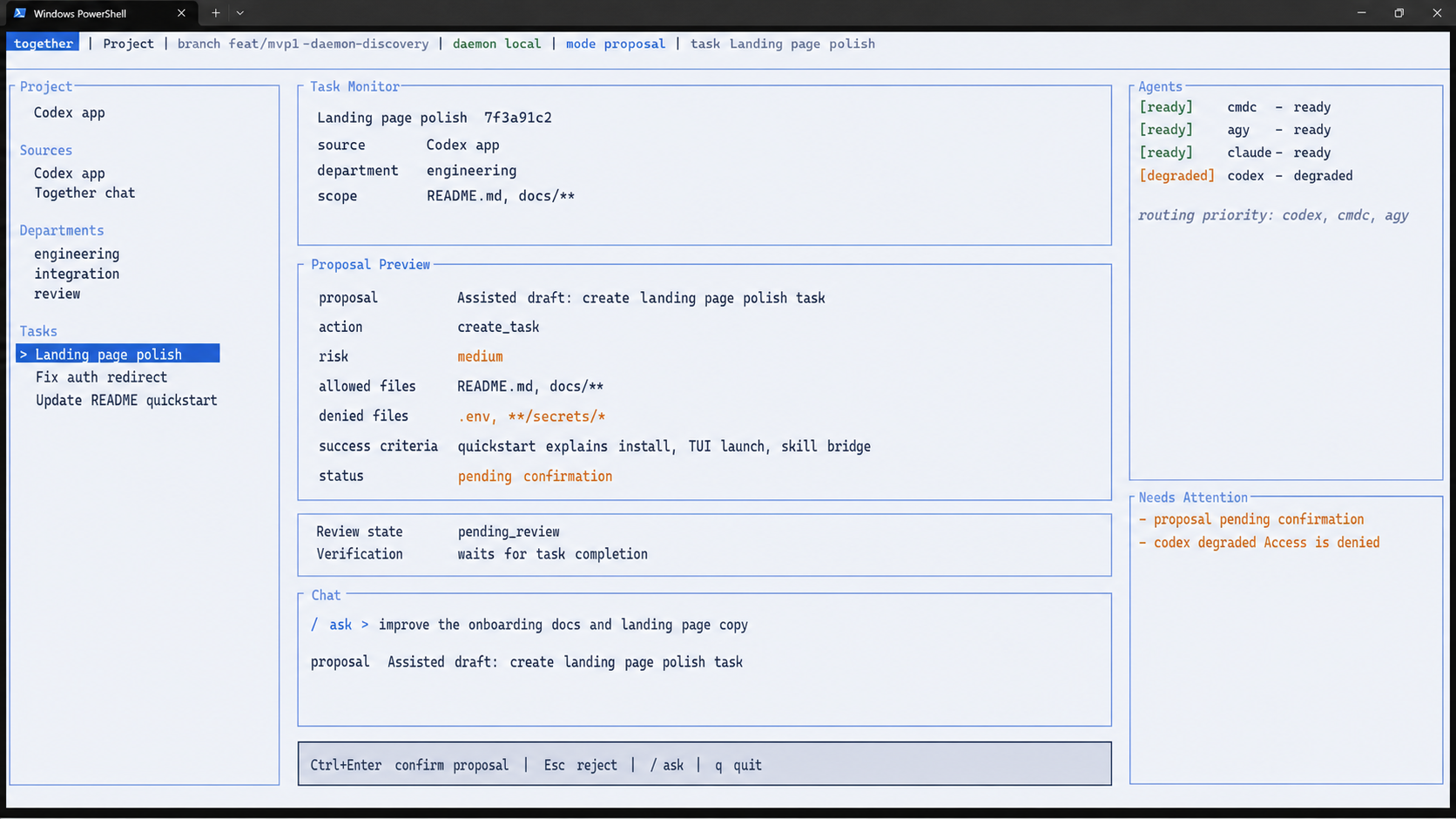
Inspect task contracts, allowed files, diff evidence, logs, review status, verification results, and integration decisions.
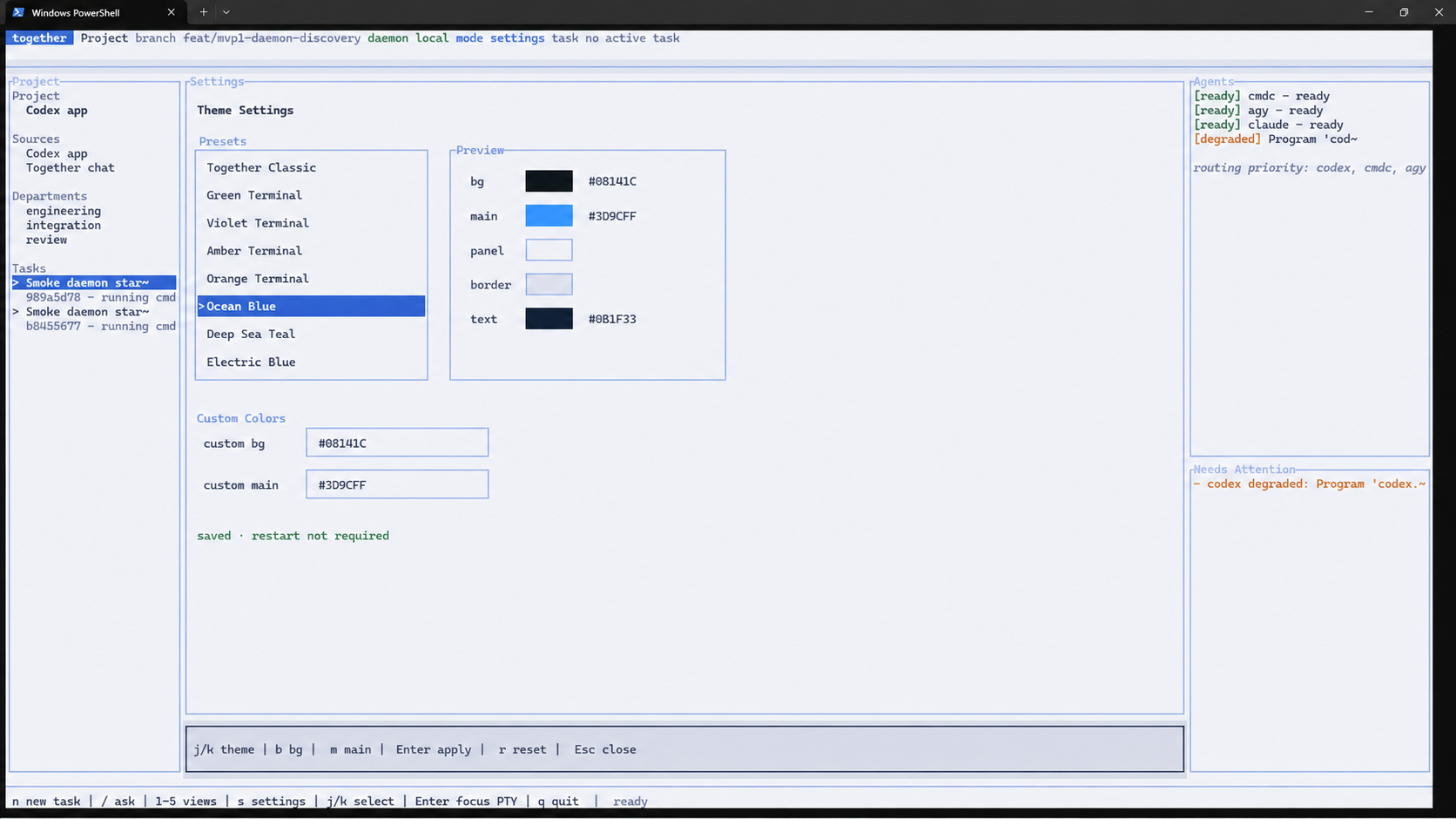
Configure providers, routing policy, daemon/client behavior, approval defaults, local artifacts, and workflow preferences.
Video & Walkthrough
Timeline
Behind The Project
AI departments, not AI chats
Together Working treats AI coding agents as workers with roles, capabilities, state, and permission boundaries. Codex does not need to carry the entire context; it coordinates, verifies, and integrates the output of specialized workers.
CLI-first operating layer
The product has moved into a CLI/TUI surface because that matches where developers already work. Developers can inspect daemon status, browse tasks, watch the monitor, request review, approve results, and adjust settings from the terminal.
Task contracts instead of open-ended prompts
Each task carries scope, allowed files, denied files, deliverables, success criteria, reviewers, and verification requirements. This reduces out-of-scope edits and makes the output reviewable before integration.
Measuring performance through real workflows
Together Working is being tested inside developer work sessions to observe context size, task latency, fallback rate, verification pass rate, diff quality, and human review effort. Those metrics become the foundation for routing intelligence and credible benchmarks.
Gallery
Interested in this project?
Let's build practical edge and AI systems for your workflow.