Kimi K3 Explained: Why This Open-Weight Model Matters

Image: Moonshot AI / Kimi K3 repository. Use subject to the repository’s license and attribution requirements.
Kimi K3 became interesting because it combines frontier-scale capacity with an open-weight release. Moonshot AI describes it as a 2.8-trillion-parameter native multimodal agentic model with a one-million-token context window.
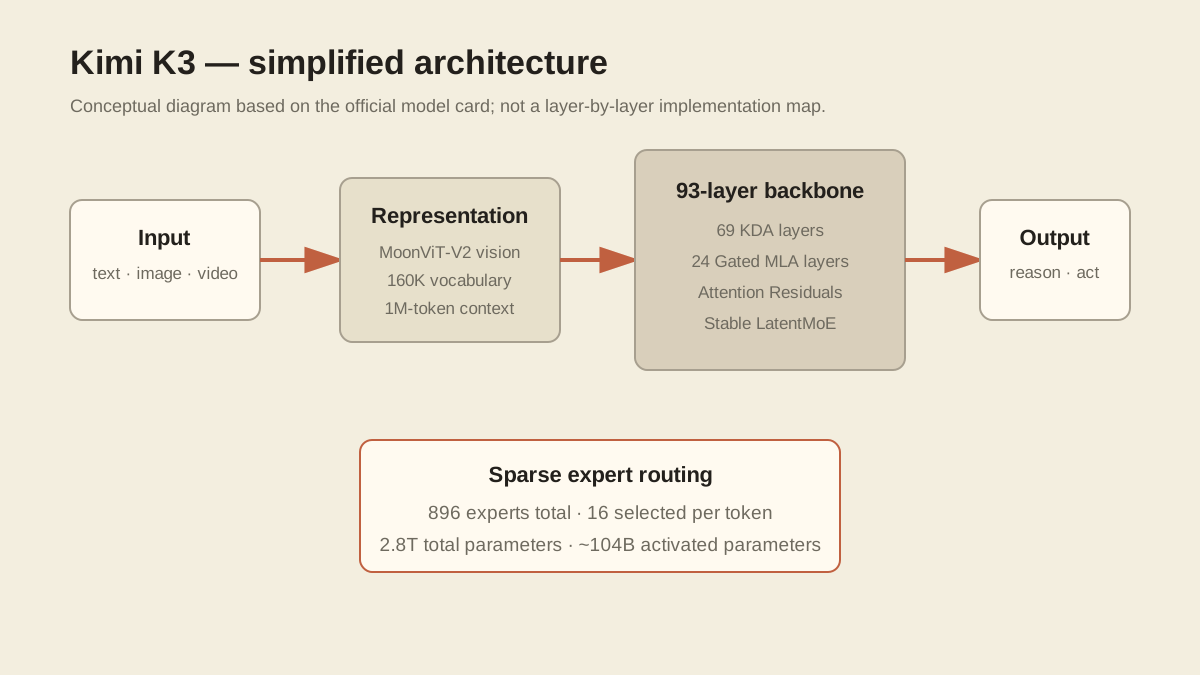
A conceptual architecture map derived from the official model card.
The number that needs context
K3 is a Mixture-of-Experts model. Its reported architecture contains 896 experts, while 16 experts are selected per token, producing about 104B activated parameters. Total parameters describe capacity; activated parameters are closer to the compute used for each token. Neither number alone tells us serving cost.
KDA and Attention Residuals
Kimi Delta Attention is intended to improve long-sequence information flow while reducing the cost profile of full attention. Attention Residuals change how information is mixed across depth. These are architectural claims that should be read with the technical report and independent serving measurements, not as a guarantee of quality for every task.
Native vision and long-horizon work
K3 accepts visual input within the model pipeline and advertises coding, knowledge work, and agentic tasks. A long context can help an agent keep repository files, tool results, and intermediate plans available. It does not remove the need for context management, permissions, tests, or human review.
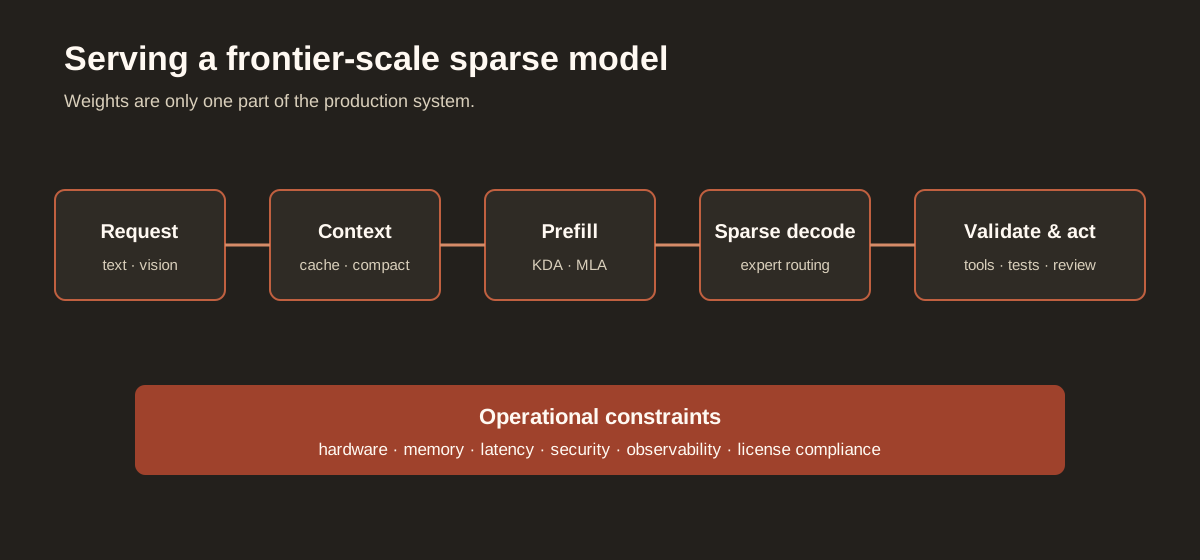
Open weights still require a complete inference and operations stack.
Why the release matters
Open weights give researchers and engineers more control over evaluation, deployment, and adaptation than a hosted endpoint alone. They also move responsibility to the operator: hardware, security, model updates, data rights, output validation, and license compliance.
The Kimi K3 license is not the same thing as an unrestricted public-domain grant. Commercial products above specified revenue or user thresholds may have attribution or contract obligations. Anyone deploying it should read the current license directly.
K3 is therefore important less because “2.8T” is a magic number, and more because it shows how architecture, sparsity, multimodality, inference systems, and distribution are now one engineering story.
Sources
- Kimi K3 technical blog — Moonshot AI
- Kimi K3 repository and technical report — Moonshot AI
- Kimi K3 model card — Hugging Face
- Kimi K3 serving architecture — vLLM project
Image: Moonshot AI / Kimi K3 repository. Consult the repository license before reuse. [D:/work/michael/michael_techs_visitor/src/content/blog/vi/kimi-k3-explained.md] @APPEND
Nguồn tham khảo
- Kimi K3 technical blog — Moonshot AI
- Kimi K3 repository và technical report — Moonshot AI
- Kimi K3 model card — Hugging Face
- Kimi K3 serving architecture — vLLM project
Hình ảnh: Moonshot AI / Kimi K3 repository. Vui lòng đọc license trước khi tái sử dụng. [D:/work/michael/michael_techs_visitor/src/content/blog/zh-cn/kimi-k3-explained.md] @APPEND
参考来源
- Kimi K3 technical blog — Moonshot AI
- Kimi K3 repository 与 technical report — Moonshot AI
- Kimi K3 model card — Hugging Face
- Kimi K3 serving architecture — vLLM project
图片:Moonshot AI / Kimi K3 repository。再次使用前请阅读仓库许可证。
New posts, shipping stories, and nerdy links straight to your inbox.
2x per month, pure signal, zero fluff.